


LIMS for research laboratories: manage your analysis data
Centralize your methods, ensure traceability of your data, and replicate your successes with our LIMS. The 100% dedicated laboratory software that supports your research and development, from testing to results.









Why integrate a LIMS into your R&D laboratory?
Centralized management to accelerate your innovation cycles and strengthen your scientific credibility.
Centralization of methods and scientific repositories
Centralize your analysis databases, manufacturing and processing methods, and associated parameters. Define components, proportions, and operations, and track their versions. Each method is linked to samples and results within a shared, structured repository.
Planning and optimization of practical work and existing assets
Plan your tests, manage available resources, and optimize the use of equipment, raw materials, and internal expertise. Analyze data from past projects to refine your protocols, reduce unnecessary iterations, and fully leverage existing work.
Scientific data integrity
Manage the production of research data throughout its lifecycle. Record experimental conditions, adjustments made, and successive validations. Results can be reviewed, compared, and justified retrospectively.
Control of experimental changes
Track changes to methods, parameters, and protocols to maintain a clear view of project evolution and scientific choices.



Tailor-made features for your analytical services
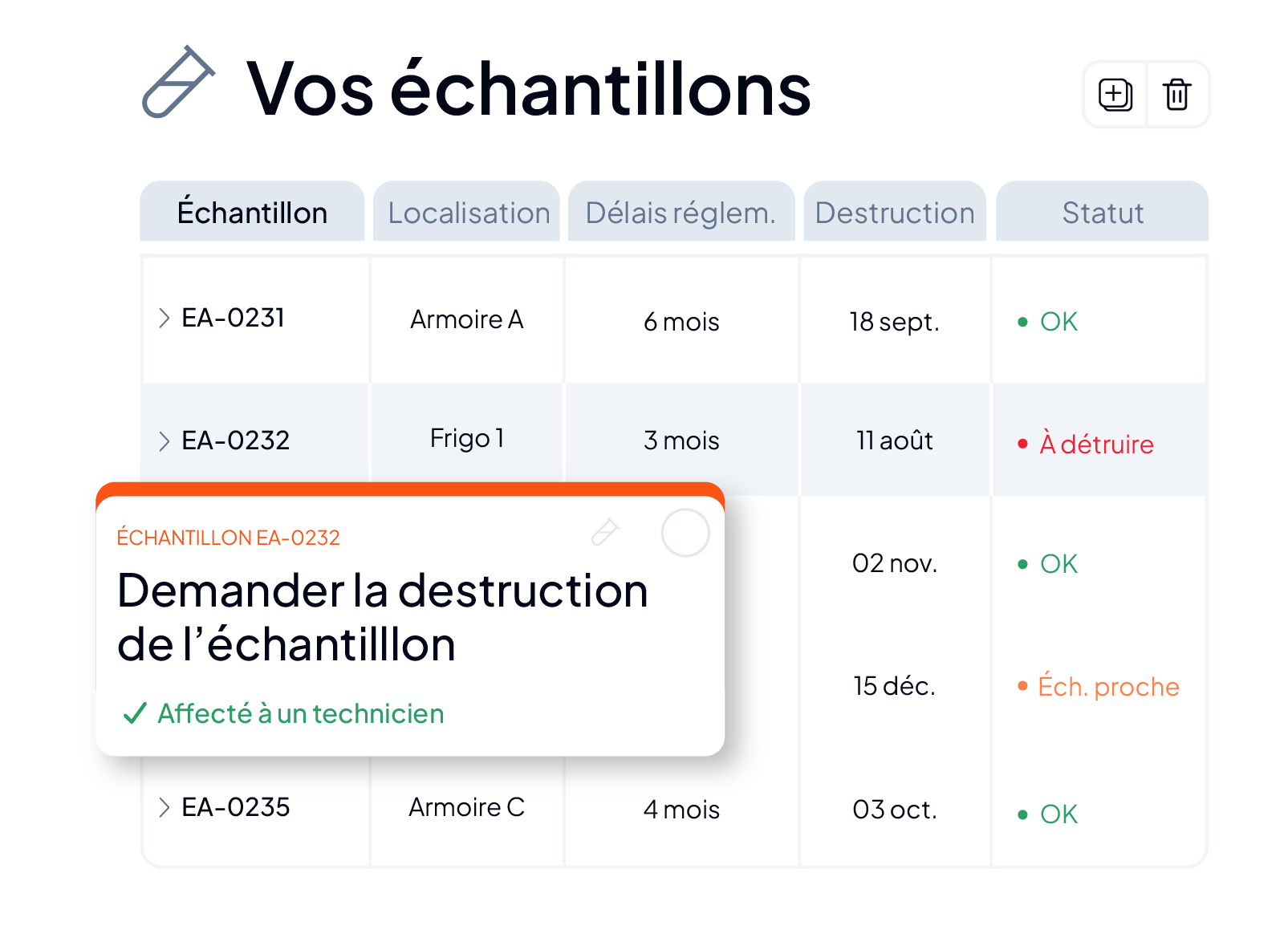
Sample management and traceability
Register, identify, and track your samples throughout their lifecycle. Each sample is linked to its project, methods, and results, with a complete history of sampling, storage conditions, and handling.

Breakdown and documentation of research projects
Break down and formalize the key stages of your projects: objectives, tests, adjustments, decisions, etc. Changes are tracked over the long term, ensuring continuity in your work.
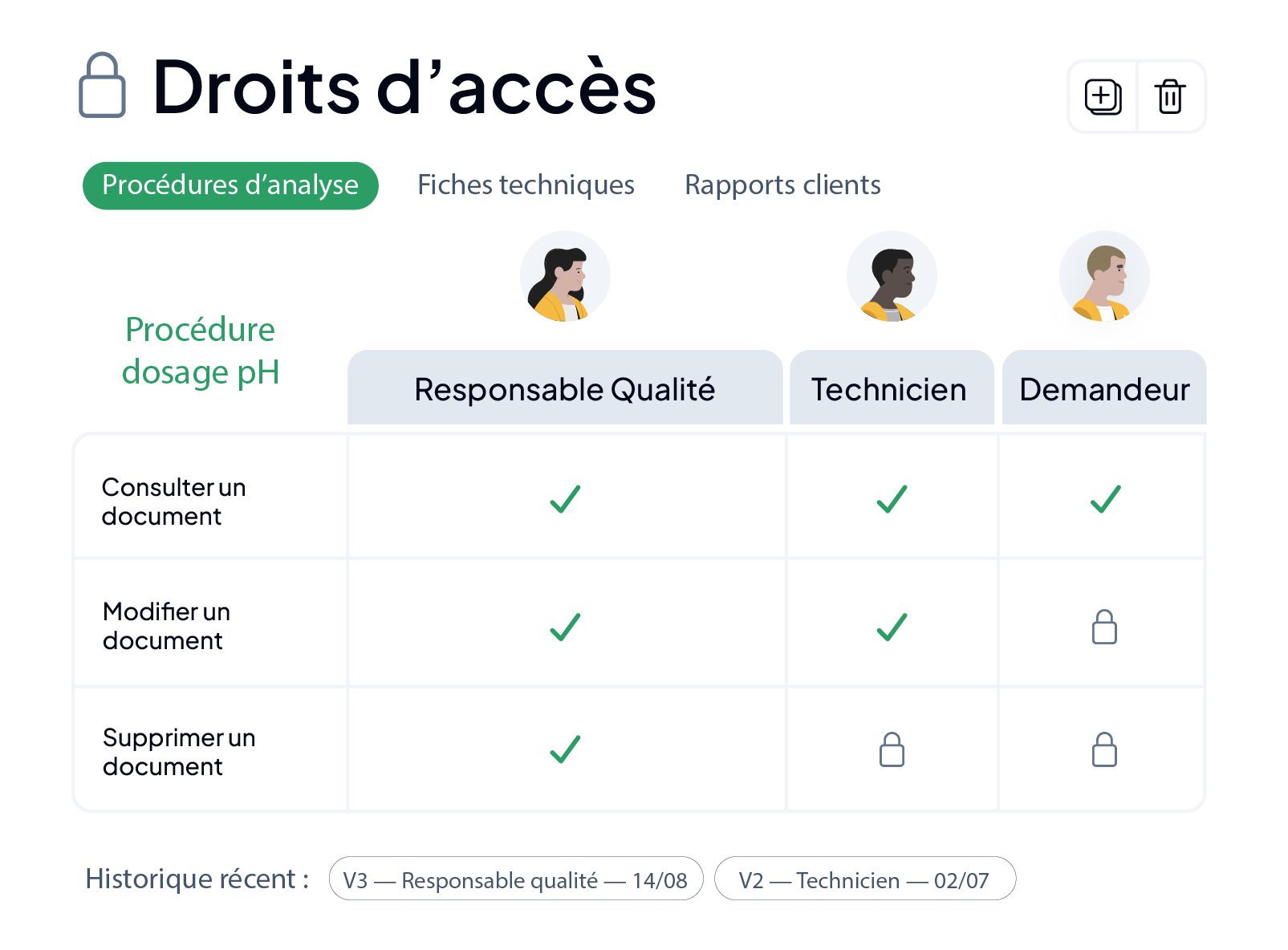
Use, analysis, and sharing of acquired data
Enter and consolidate results according to different criteria (by project, by batch, by analysis, or by worksheet), then make them available to teams for analysis, statistical processing, and exchanges with internal requesters.

Equipment and resource scheduling
Manage and track the use of equipment and instruments, anticipate their availability, and plan research activities according to material and human constraints.

Statistical analysis and results reporting
Generate your test reports and analysis certificates, dashboards, and statistical summaries. Compare your results over time and share clear deliverables with your teams and internal requesters.
Discover all the features of our LIMS to optimize your laboratory management


Test it for yourself!

Electronic lab notebook
Structure your research projects from the outset with the Electronic Lab Notebook. Break down your work by project, sub-project, etc. Bring together notes, protocols, observations, and results in one place, linked to the relevant samples. Track progress and maintain a clear view of your research.

Customization of templates and methods
Customize the LIMS to match your research projects, experimental methods, and specific parameters.

A controlled functional workflow, from project structuring to results distribution
Benefit from software calibrated for every level of requirement.
Breakdown of the different project dimensions.

AQ Manager LIMS, the benchmark for R&D laboratories
For over 30 years, AQ Manager has helped R&D laboratories manage research projects that are constantly evolving, while maintaining full traceability of tests, data, methods, and decisions made.



Our customer cases



Would you like to learn more about the LIMS dedicated to R&D laboratories?

Frequently asked questions
A LIMS (Laboratory Information Management System) is laboratory management software that centralizes samples, methods, results, and resources, and automates your lab activities from A to Z. It is suitable for quality control laboratories, service providers, and research and development laboratories alike.
In research and development, it is primarily used to track experimental conditions, version methods, and keep a complete history of each test. The goal is to make your work reproducible, keep your data usable over time, and centralize your scientific knowledge in one single place.